Logical Reasoning
Detailed Analysis of UPSC Paper 2, CSAT 2025 with Answer Key




















A critical review of CSAT trends, difficulty levels, and preparation strategy for UPSC aspirants.
The Civil Services Aptitude Test (CSAT), officially known as General Studies Paper 2 in the UPSC prelims paper, is a qualifying exam. Candidates must score a minimum of 33% marks (66.67 out of 200) to be declared eligible for the Mains stage. Although the CSAT exam marks are not counted in the final merit of the prelims, its importance must not be underestimated.
Over the last few years, CSAT has emerged as a major hurdle, especially for non-engineering or non-mathematics background aspirants. Surprisingly, even candidates from strong technical backgrounds have failed to qualify CSAT. What was once considered a mere formality has evolved into a more challenging exam—featuring complex reading comprehension passages, time-consuming logical reasoning puzzles, and difficult quantitative aptitude problems.
Given this evolving pattern, it is no longer feasible to take CSAT lightly. Even well-prepared candidates who perform well in GS Paper 1 often fail the CSAT exam due to underestimating its difficulty. Understanding this transformation and adapting your preparation accordingly is now essential for clearing the UPSC prelims.
CSAT Exam 2025: Paper Snapshot
- Total Questions: 80
- Total Marks: 200
- Time Limit: 2 Hours
- Negative Marking: 1/3rd mark deducted for every incorrect answer
- Qualifying Marks: 66.67 (33%)
- Medium: English / Hindi
VisionIAS Foundation Course General Studies
UPSC Prelims 2025 CSAT Question Paper
Section-wise Question Distribution (To be updated)
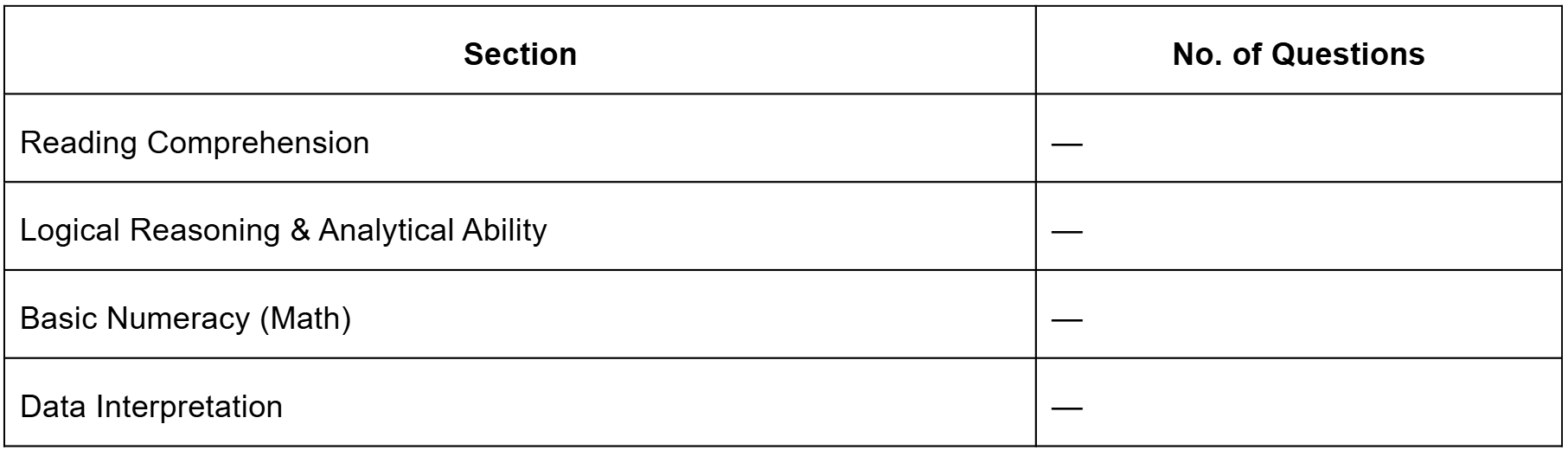
Topic-Wise Break up CSAT 2025 Paper
To be updated post prelims 2025 exam
Difficulty Level Analysis of past CSAT Papers (2019-2024)
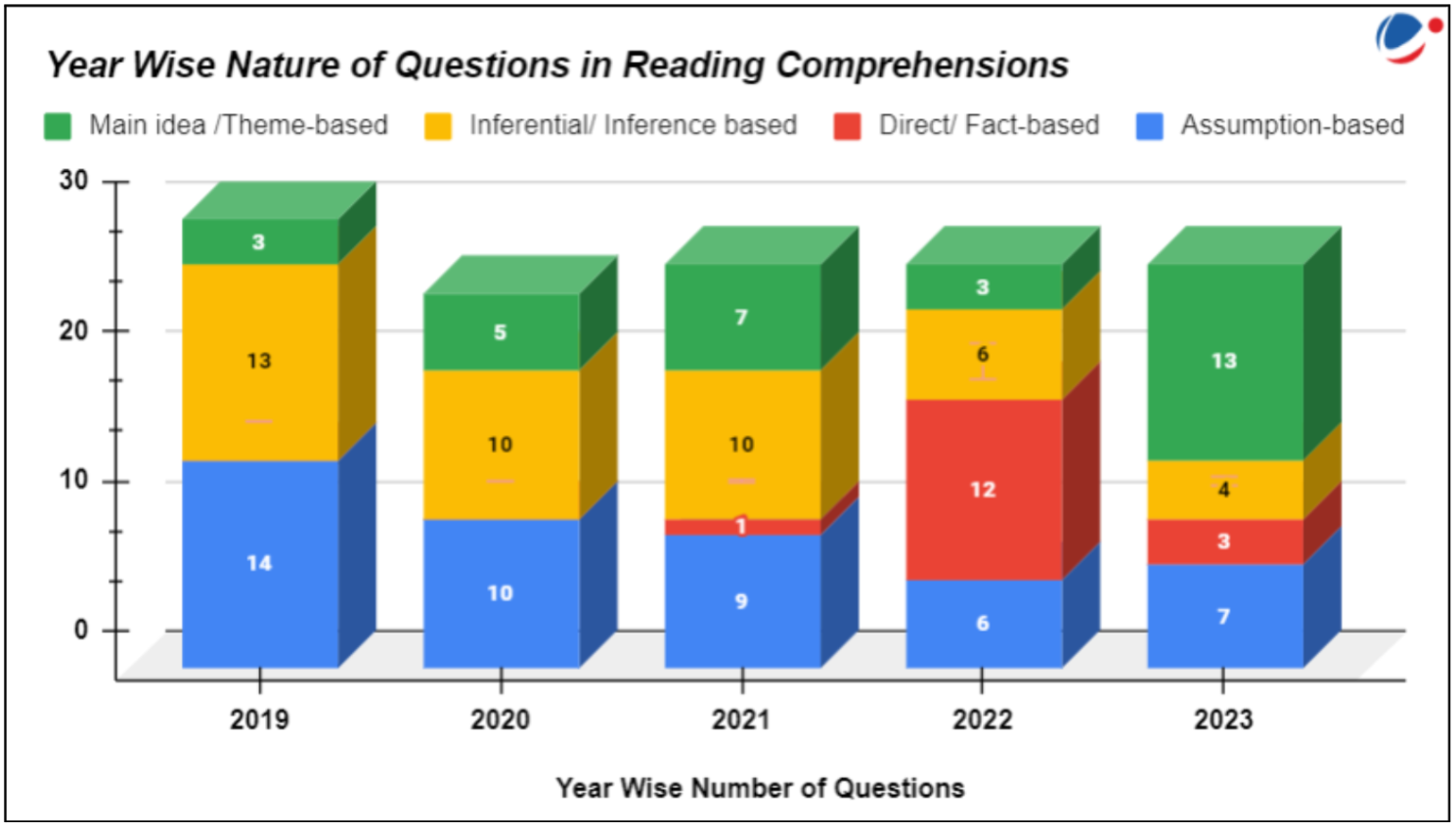
Reading Comprehension – Moderate to Tough
- Trend: In recent years, about 30–35% of the UPSC CSAT exam has consisted of reading comprehension.
- Features:
- Passages are longer, more abstract, and often academic or philosophical in nature.
- Options are extremely close and confusing, requiring deep understanding and elimination skills.
- Multiple questions based on a single passage increase time pressure.
- Implication: Speed reading alone isn’t enough. One must interpret between the lines and eliminate misleading choices with precision.
Logical Reasoning – Moderate
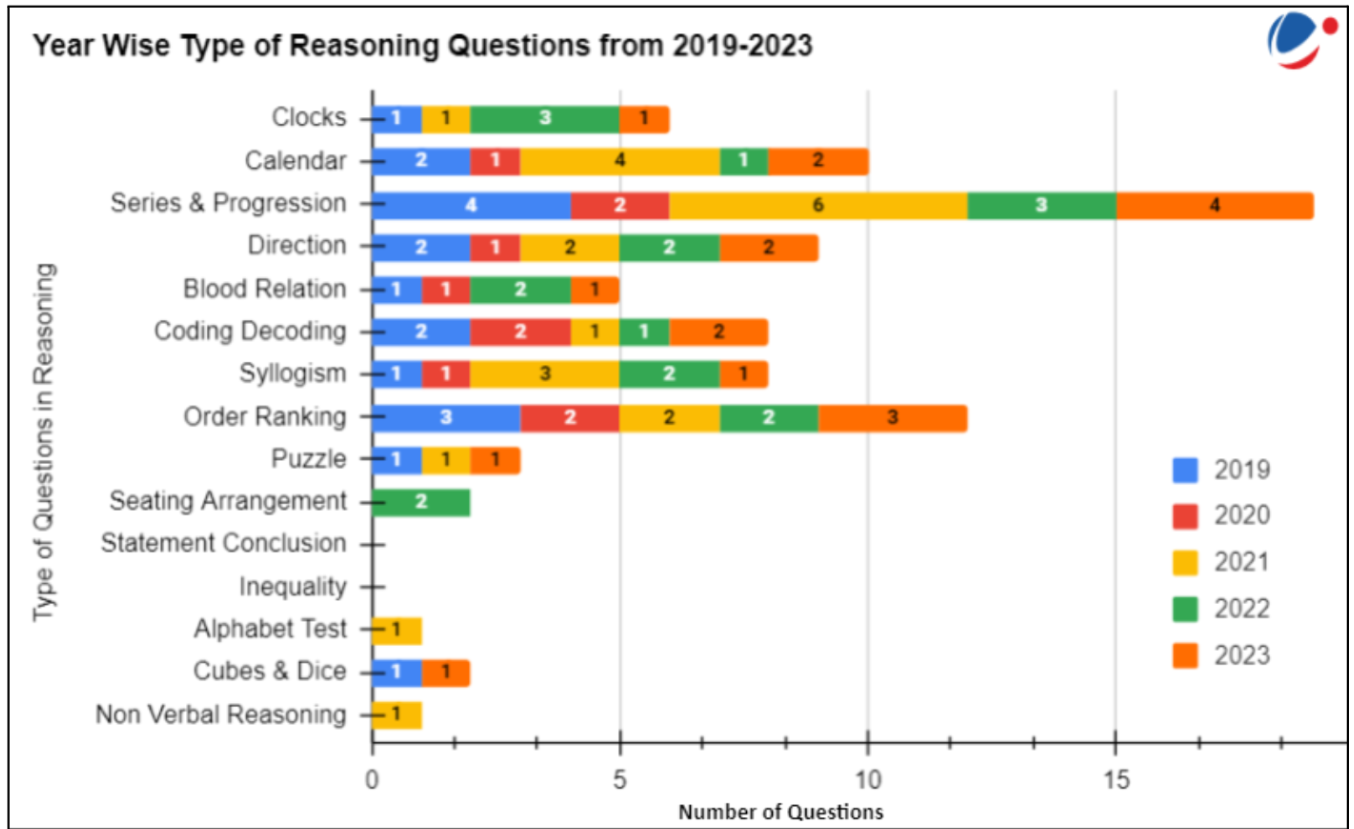
- Trend: Since 2023, puzzles and arrangement-based questions have grown more complex.
- Features:
- Circular/linear arrangements, direction sense, and ranking puzzles are time-consuming and multi-layered.
- Questions demand multi-step deductions testing both speed and accuracy.
- Statement-conclusion, assumption, and cause-effect based questions require analytical clarity.
- Implication: Without prior puzzle-solving practice, solving more than 2–3 puzzles in the allotted time becomes difficult.
Numeracy/Quantitative Aptitude – Moderate to Tough
- Trend:
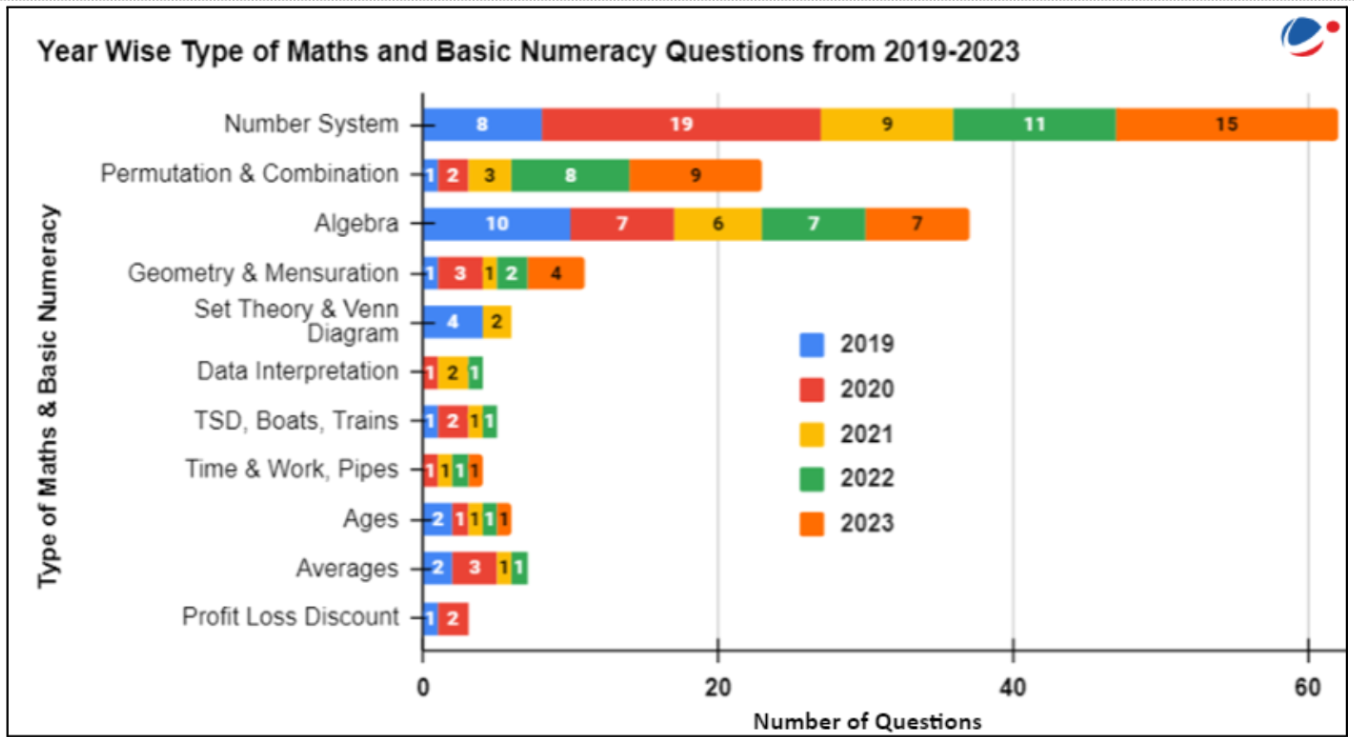
- Number System consistently dominates the CSAT exam.
- Permutation & Combination saw a rise till 2023, but disappeared in 2024.
- Geometry, Mensuration, Set Theory, and Venn Diagrams are rare but conceptually diverse.
- Topics like Time-Speed-Distance, Time & Work, Pipes & Cisterns, Profit-Loss, Percentages, and Ratios appear irregularly but widen the paper’s scope.
- Implication: A balanced, concept-driven strategy is needed. Basic formulae and regular practice are a must, regardless of academic background.
CSAT is Now a Real Challenge
- CSAT is no longer a mere qualifying paper; it has become a major eliminator, especially for humanities students.
- In 2023 and 2024, many candidates who scored high in GS Paper 1 failed due to poor CSAT performance.
- You cannot rely on just one section—combined mastery of RC, reasoning, and math is now essential to safely secure 66.67 marks.
How to Evaluate Your CSAT Performance?
Here’s a step-by-step method:
- Check answers using a reliable answer key.
- Count correct and incorrect answers.
- Marking scheme:
- +2.5 marks for each correct answer
- –0.83 marks for each incorrect answer
- Score Calculation Example:
- Attempted: 80
- Correct: 60 → 60 × 2.5 = 150
- Incorrect: 20 → 20 × 0.83 = 16.6
- Net Score: 150 – 16.6 = 133.4
VisionIAS All India GS Prelims & CSAT Test Series
VisionIAS Optional Classroom Program
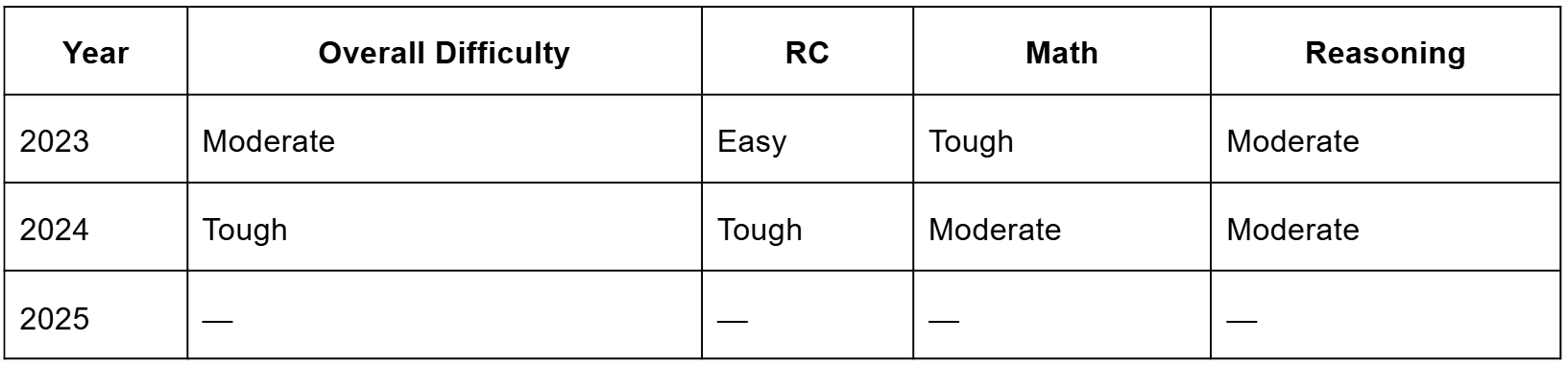
Year-on-Year Comparison: 2023 vs 2024 vs 2025 (To be updated)
Who Struggled with CSAT? A Reality Check
1. Humanities Background Aspirants
Traditionally focusing only on GS Paper 1, many humanities aspirants ignored CSAT. But post-2021, CSAT evolved into a more analytical and quant-heavy test.
- RC and reasoning may be strengths, but numeracy and data interpretation often prove challenging.
- Sole reliance on language skills is no longer safe.
2. Those Who Ignored CSAT
Relying on past academic performance is no longer enough.
- Many high scorers in GS Paper 1 failed CSAT due to poor practice, panic, or poor time management.
- The shift to conceptual and application-based questions demands consistent practice.
3. RC-Only Strategists
Some candidates bet entirely on Reading Comprehensions(RC) to clear CSAT.
- Earlier this worked when RC was simple and dominant.
- Recent papers show a balanced mix—RC, reasoning, and math each carry significant weight.
- Without regular arithmetic and puzzle practice, even strong readers failed to clear 33%.
“CSAT, Don’t ignore it! Practice diligently, especially if you know your weak areas (Quantitative aptitude/Reading Comprehension). PYQs and VisionIAS classroom tests are vital here.” VisionIAS Classroom Student, Harshita Goyal (AIR-2, UPSC 2024) says at VisionIAS Topper Talk Event.
Watch: Talk of VisionIAS Topper Harshita Goyal (AIR 2)
Strategy Ahead: How to Crack CSAT
- Take CSAT Seriously: It’s a qualifying paper that can disqualify you. Don’t let CSAT ruin your GS score advantage.
- Attempt Full-Length Mock Tests: Improve stamina, identify weak areas, and simulate real-exam conditions.
- Balance Speed & Accuracy: Practice mental math, approximations, and logical elimination. Every mark counts.
- Strengthen Weak Areas: Whether it’s puzzles or percentages, build confidence in at least two out of the three CSAT areas.
- Confidence in CSAT paves the way for Clarity in Mains Preparation. One can shift focus to GS mains and Essay immediately after Prelims. Further, can revise optional subjects and work on answer writing. And use the buffer time to build static-dynamic linkages in topics like Environment, Ethics, Governance, and Economy.
Know the Topper Archit Dongre’s (AIR-3, UPSC 2024, AIR-153 UPSC 2023) way of surviving a tough UPSC Prelims Paper, Watch: Talk of VisionIAS Topper Archit Dongre (AIR 3).
Also explore,
VisionIAS All India GS Mains, Essay & Ethics Test Series
Conclusion
CSAT has steadily disproven the notion of being an “easy formality.” With increasing difficulty and unpredictability, it’s now a core component of the UPSC prelims paper. The trend clearly shows that UPSC now expects aspirants to have solid foundational aptitude—whether comprehension, reasoning, or numeracy.
Hence, CSAT should be prepared with the same sincerity as GS Paper 1, and only a balanced, well-planned strategy with regular practice will help you qualify it with confidence.
Frequently Asked Questions (FAQs) (To be updated)
Q. What are the qualifying marks for CSAT 2025?
A. 33% or 66.67 marks out of 200.
Q. Was CSAT 2025 tougher than the previous year?
A. (To be updated post-exam analysis)
Q. How can humanities students crack the CSAT exam?
A. Focus on mastering basic numeracy topics like percentages, averages, ratios, and time-speed-distance through regular mock test practice. Work on RC and reasoning while improving speed and accuracy.
Q. Does the CSAT score count in the prelims cut-off?
A. No. CSAT is only qualifying in nature. If you fail to score 66.67 marks, your GS Paper 1 score is not considered for the cut-off.
Q. What was the key trend in the UPSC last year question paper for CSAT?
A. Increasing difficulty across Reading Comprehension and balanced weightage of reasoning and numeracy in the CSAT exam.
Q. Where can I download the UPSC CSAT question paper PDF?
A. You can download the UPSC CSAT question paper PDF from the official UPSC website or VisionIAS after the exam.